In our last post, we recommended preparation steps for the scheduled client partner meeting to discuss your difficult situation, and reviewed an approach when your team was responsible for the original issue. This next installment covers what to do when your partner is at fault, and how to survive either of these two scenarios.
Top of Mind from 3by400
Our blog posts are the result of issues and opportunities we see in our daily work. They are designed to increase understanding and provide a source of vision for your web presence.
7382 Hits
We know you’ve been there—something did not go as planned and conflict has arisen. It happens in business, because business occurs between human beings. Your response to these situations can make or break your client partnership, so your initial steps in preserving your partnership are crucial. Since this post builds on concepts presented in “Being a Partner 201: Recognizing Your Partner”, please start there.
9255 Hits
After an initial interaction with a prospective client, I immediately know if this is an organization with whom our company can partner. How do I know? From a strictly business sense, we have the skills and experience to recognize a need that we can fill, and fill well. Yet, there is another, more interpersonal aspect of organizational match and agreement on establishing a path of success that are just as important for a true partnership. As with the start of any deep, committed relationship, what you do in the first meeting is crucial. If you are looking for tips on recognizing true partner material, read on!
25622 Hits
Over the last several months, as new versions of Chrome, FireFox, and Internet Explorer have been released, we have experienced a much higher report of “connection is not secure” messages, especially for sites that collect sensitive or private information. These can be as unassuming as a red unlocked icon near the URL, or as intrusive as a pop-up message indicating pure doom if a viewer continues to the website in question.
Has something changed on the site? No. What has changed is the engineered deprecation of non secure sites on the internet, meaning that your web browser is now reporting sites to you that are not using Secure Sockets Layer (SSL), indicated by “https” at the beginning of the URL rather than “http”.
13731 Hits
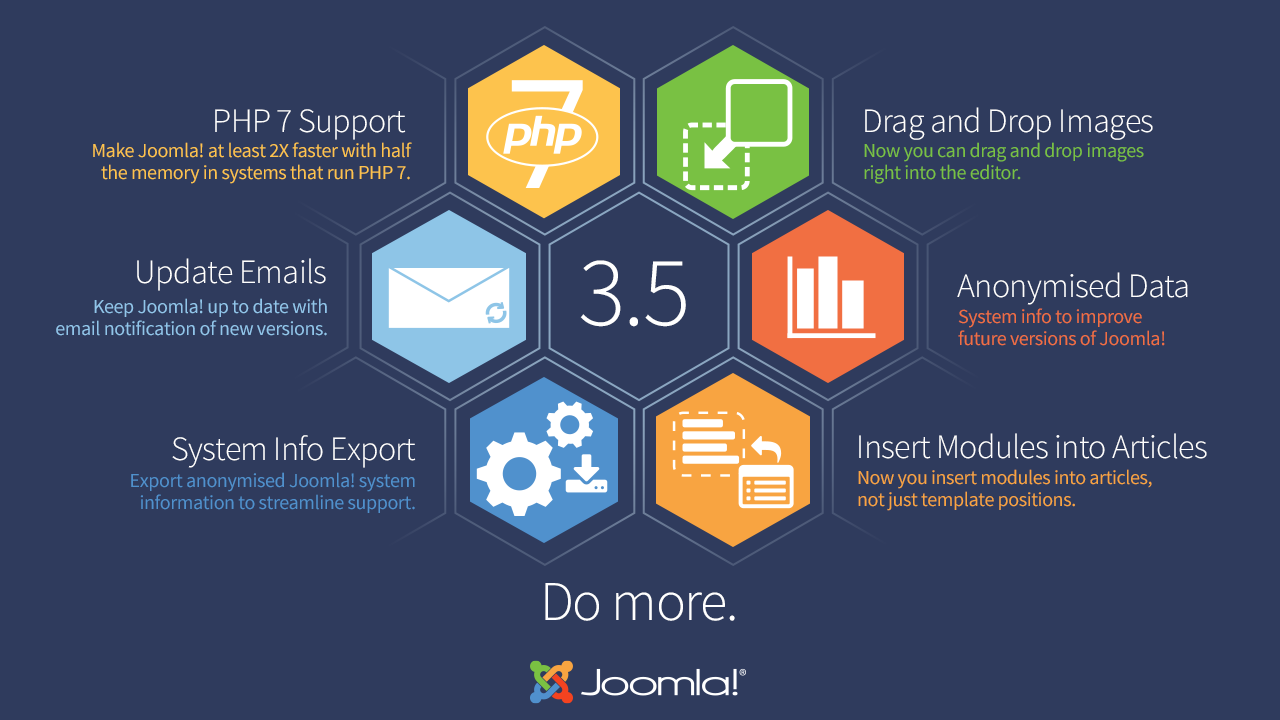
The Joomla! Project released Joomla version 3.5 today, as the latest version in the Joomla 3.x series. Joomla 3.5 boasts of 34 new features introduced in this latest release.
Here we will break down the top new features, complete with detailed explanation and screenshots where applicable from our testing.
11979 Hits